


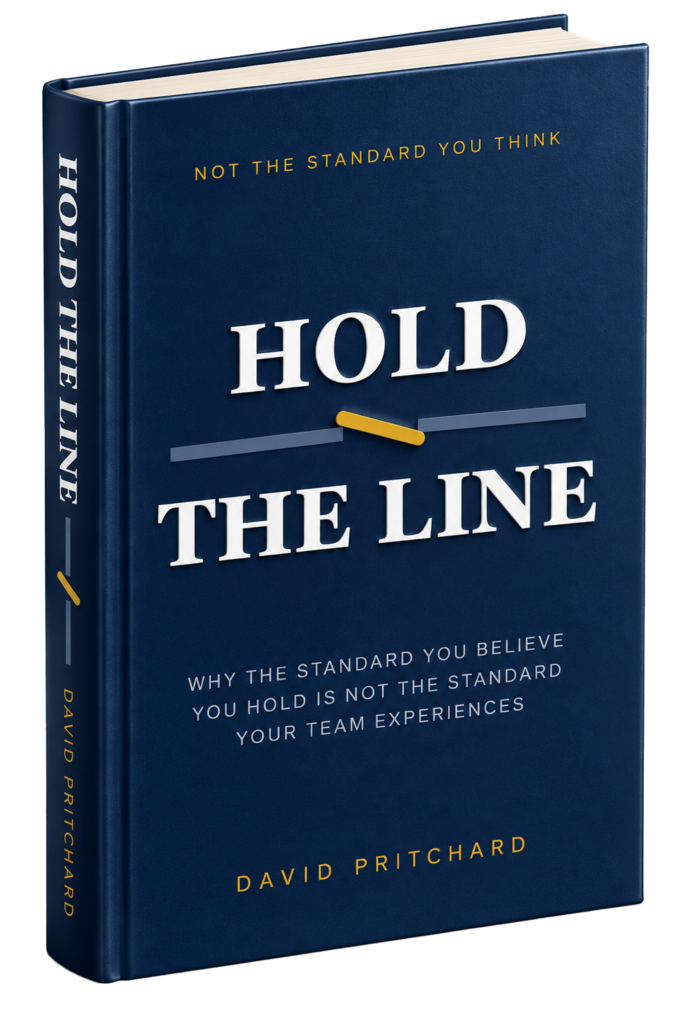
hold the line
Why the standard you believe you hold is not the standard your team experiences
A repeatable system for the experienced manager who knows the line has moved.
Not ready to buy? Get the free one-page Grid ↓
You already know
You have run a team for years. You have had the difficult conversations. You know what good looks like.
And still the line moves.
The test record signed off without the witness point. The toolbox talk skipped because the job was running late. The technician who delivers every time and speaks to colleagues in a way you would not accept from anyone else. You noticed each one. You did not act on each one.
Nobody decided to lower the standard. It lowered itself, one exception at a time.
"Your team does not experience your standard. They experience your enforcement of it."
What the book gives you
Hold the Line replaces instinct with a system. It is called SignalOS, and it has three parts that work together.
SIGNAL. Six stages to read any situation before you respond: Survey, Interpret, Gauge, Nail, Act, Learn. You stop reacting to the loudest problem and start seeing the real one.
The Performance vs Behaviour Grid. A diagnostic that places each person on two axes: what they deliver, and how they deliver it. The Grid maps the person in front of you, not your management style, so you diagnose before you speak.
Seven protocols. A defined response for each situation, from setting the standard before work begins to escalating a pattern that has not responded to correction. The same structure every time, whatever the pressure and whoever is standing in front of you.
Not a set of scripts. A system you can run.
Four people you already manage
The Grid sorts every team into four archetypes. You will recognise all of them.
The Learner.
Conduct is right, output is below standard. Wants to get it right and does not yet know how. Needs a development pathway, not a warning.
The Toxic Learner.
Hits every target and damages the team doing it. The one you excuse because the numbers are good.
The Problem Case.
Below standard on output and on conduct. The one you have been managing around, not managing directly.
The Star.
Delivers, and lifts the people around them. Easy to neglect, because they never cause you a problem.
The book shows you how to place each person on evidence rather than impression, and which protocol to run next.
You this book is for
If you manage a team and have noticed a few standards quietly slipping, you’re in good company, and this book is for you. It happens to capable, well-meaning managers all the time.
It’s for you if you find it easier to hold the line with some people than with others. It’s for you if you work in engineering, manufacturing or anywhere a standard carries real consequences. And it’s for you if you’d like a method you can turn to, before the conversation you’ve been putting off, rather than after.
This isn’t an introduction to difficult conversations. You’ve had plenty of those already. It picks up where experience leaves off, with the slow drift that creeps in even when you know what good looks like.
About the Author
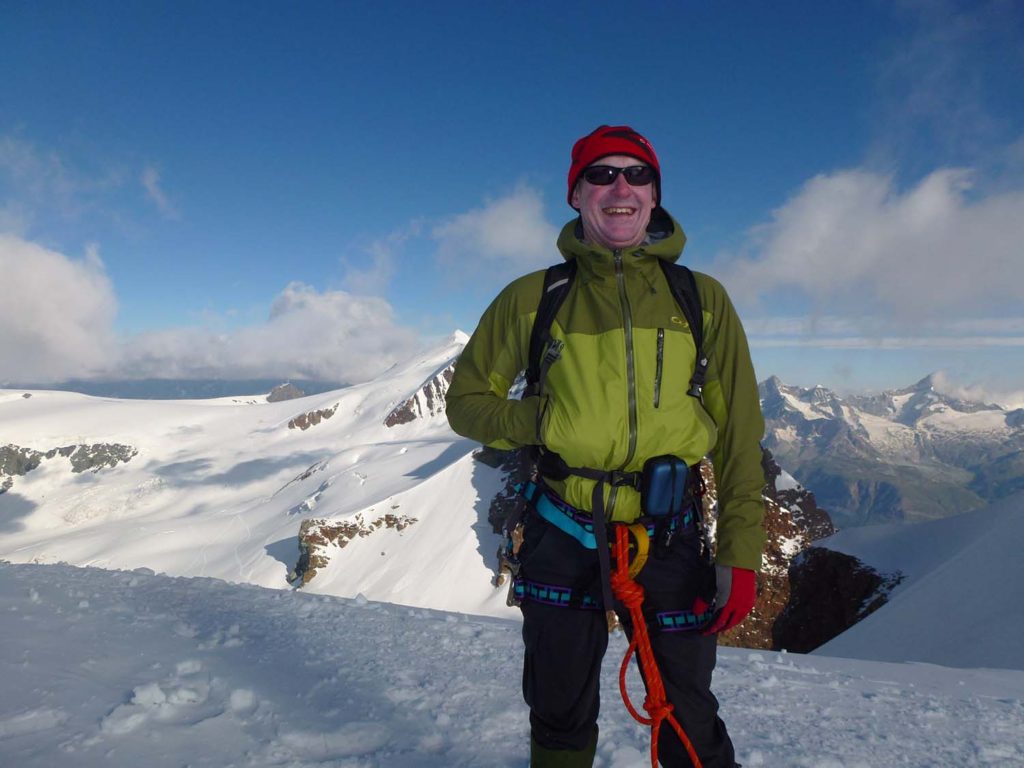
David Pritchard, MBA, is a leadership coach, mentor and founder of Roped Together, where he works with experienced managers who want to lead their teams better. He has spent over a decade managing teams across the engineering, aerospace and nuclear industries, and SignalOS is built from that experience. It was tested on real teams, under real pressure, long before it was written down.
His MBA gave him the theory. Managing people gave him the evidence for what holds up in practice, and coaching taught him how to pass it on.
You may also know David as the guide who leads walkers over the Yorkshire Three Peaks, after four years with RAF Mountain Rescue. The discipline is the same. On a mountain, the standard you let slide at the bottom is the one that finds you at the top.
BUY THE BOOK
Not ready to buy yet?
Take the Standards Gap Check. Free
The Performance vs Behaviour Grid on one page, with five questions to find where your line has slipped and who you have stopped holding to it. Ten minutes, with your team list in front of you.
By completing the form below, you agree to receive the download and occasional emails from David about holding standards. Unsubscribe at any time.
Part of Ikigai Adventures
Roped Together is the leadership coaching and development arm of Ikigai Adventures — David’s wider guiding and adventure practice, which takes individuals and groups into the mountains of the UK and beyond.
Ikigai is a Japanese concept that describes the intersection of what you love, what you’re good at, what the world needs, and what you can be supported for. It is a useful frame for understanding what Roped Together is: not a corporate coaching business that happens to use mountains, but a guiding practice that has evolved to meet a need it kept seeing in the people it served — the need for development that is honest, demanding, and genuinely transformative.
The two brands share the same values, standards, and guidelines. One builds the adventure. The other builds the leader. Both begin with the mountain.
Your Questions Answered
I have been a manager for a long time. Is this for me?
Yes. That is exactly who it is written for. The book assumes experience and addresses the problem experience does not solve.
Do I need to read it cover to cover?
Read the first two Parts in order, because they teach the system. After that, use the book as a reference: the archetype chapters, the protocols and the scenario training are built to be returned to before a specific conversation.
Can SignalOS be applied across a whole team or site?
Yes. David works with engineering and manufacturing businesses to apply SignalOS at team and operations level through Roped Together.
When is it available?
It is available now!
The standard you believe you hold is not the standard your team experiences. This book closes the gap.